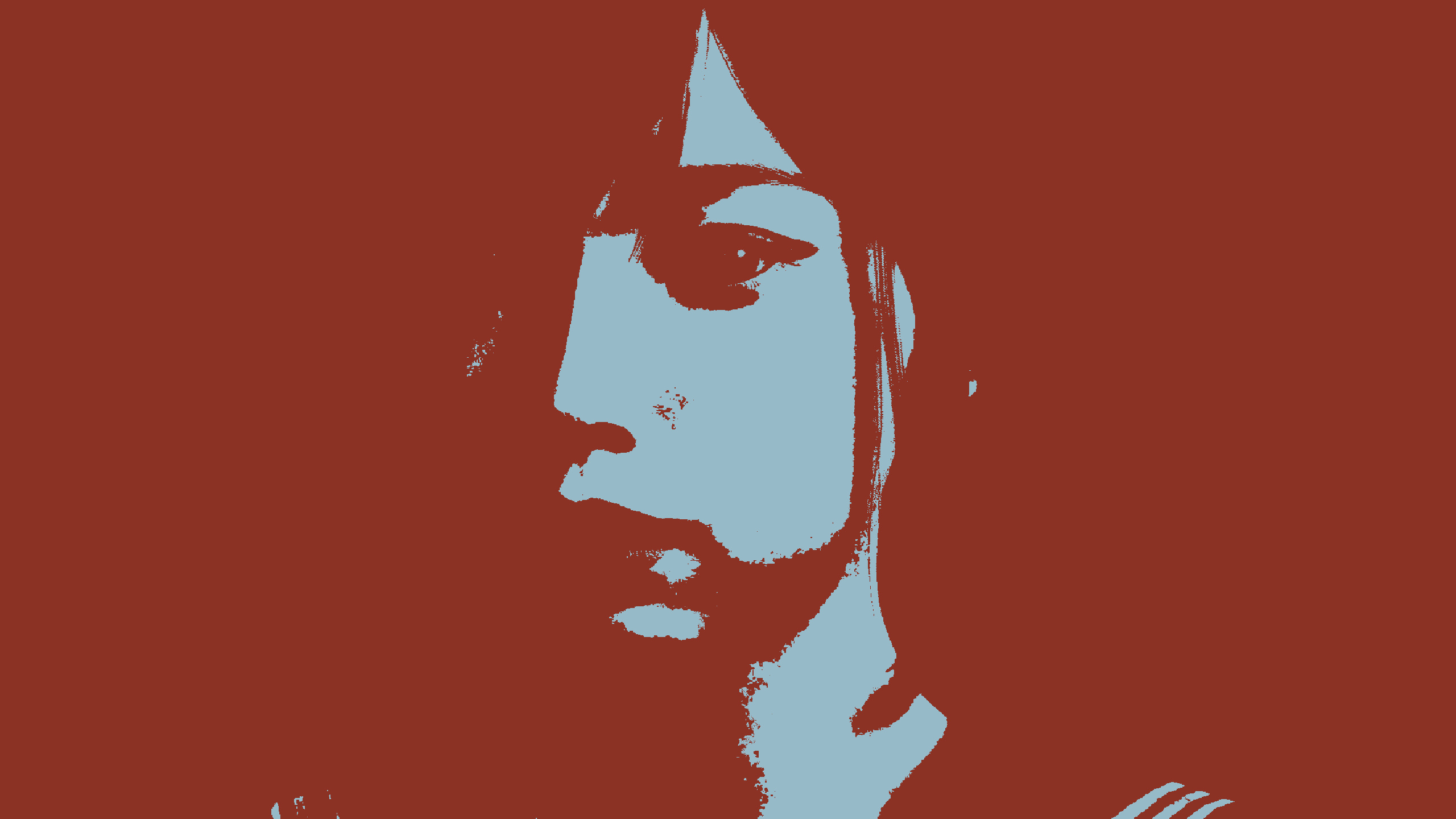
Silent Hill f is the first coherent work in its parent series for 20 years. It's about a woman in 1960s Japan struggling against the limited prospects and autonomy available to her. Love that. Its plot is structured in an unusual way: playing the game once leads to a set "first ending," but subsequent endings (three serious, one joke) require a handful of differing actions throughout the game. These endings, unlike the branching conclusions of the classic four Silent Hill games, follow the logic of writer Ryukishi07's sound novels Higurashi and Umineko in providing the "answers" to the story's posited "question."
The events of Silent Hill f are presented explicitly as unreal; that is, there is a stream of reality running beneath both the series-staple otherworld nightmare and fog-shrouded town sections. The three extra endings don't just conclude the story; in conjunction with the new documents you collect, they clarify its events, like a gradual adjustment of focus.
Shimizu Hinako's gorgeous handwritten journal+ is an open window into the reality of what's "actually" happening to her. Even Silent Hill 3's expressive, sarcastic Heather Mason was an enigma by comparison. Aside from a clutch of important cutscenes, the game tells its story through this journal and the collectible documents. So you learn that in the real world, Hinako is caught between the demands of her family and her desire not to end up like her submissive mother; she's set to marry Tsuneki Kotoyuki, a boy from the richest family in Ebisugaoka, in a marriage arranged to pay off her father's debts. Her rage builds and builds in the fog-world sections, really flexing the superb voice work of actress Konatsu Kato. In the otherworld half of the game, Hinako is in thrall to a man in a fox mask, following him through a literal nightmare of tradition—she mutilates herself and destroys her friends to become a suitable bride. Here Hinako becomes more and more passive, almost hypnotized, as her selfhood is burnt away.
The abrupt first ending, where Hinako apparently kills her wedding party in a drug-addled frenzy, is the game's strongest: it suggests all kinds of things without saying them outright, echoing the paranoid, violent outburst at the end of Higurashi chapter one. It makes you want to play again, and the second time through is transformative in some ways; there are just enough new areas and memos to sustain the repetition. But the Silent Hillisms of the game melt away bit by bit through the endings: the boss battles enter gaudy Code Vein territory, and the character dynamics are tied off in simplistic, even silly ways. Along the path to the game's true ending, Hinako has breakthrough conversations with her mother and father and reconciles with her literal other half, while Kotoyuki vows to abandon the arranged wedding and become a better man for her by nurturing his inner child. Perhaps this desire for healthy conflict resolution stems from Ryukishi's much-cited past as a social worker, but the question/answer structure only sets these endings up to fail. Horror fiction, as a rule, benefits from brevity: Silent Hill 3 is a six-hour game. Even with streamlining, replaying Silent Hill f several times is a pretty grueling experience. The climax is a meat grinder of three or four unavoidable combat gauntlets followed by boss fights with their own wave-based design. The mechanics of the game are solidly composed, with good push-pull between a focus on dodging or a focus on countering, but they hit their ceiling long before the game is finished tossing monsters at you.
It's all too explicit, I guess—all the dead air, the negative space is walled in with detail. The head-injury tone of Silent Hill 2's listless cutscenes or the overwhelming visual noise in Silent Hill 3's otherworld are what characterize Silent Hill to me. These are games that have sustained decades of theorizing about what they mean, about symbolism and minutiae in art direction and dialogue, to the point of absurdity. Silent Hill f is about what is going on, and it makes far too much sense by the time you're done with it.
///
+ A perfect example of what Pentiment director Josh Sawyer called "maximum viable product"—an expenditure of effort and resources to elevate an ostensibly minor detail of the work.
***
Astrid Anne Rose is a long-time contributor to Bullet Points. Her work can be found in MEGADAMAGE, BOMB Magazine, and The New Lesbian Pulp, as well as on Gumroad and itch.io.