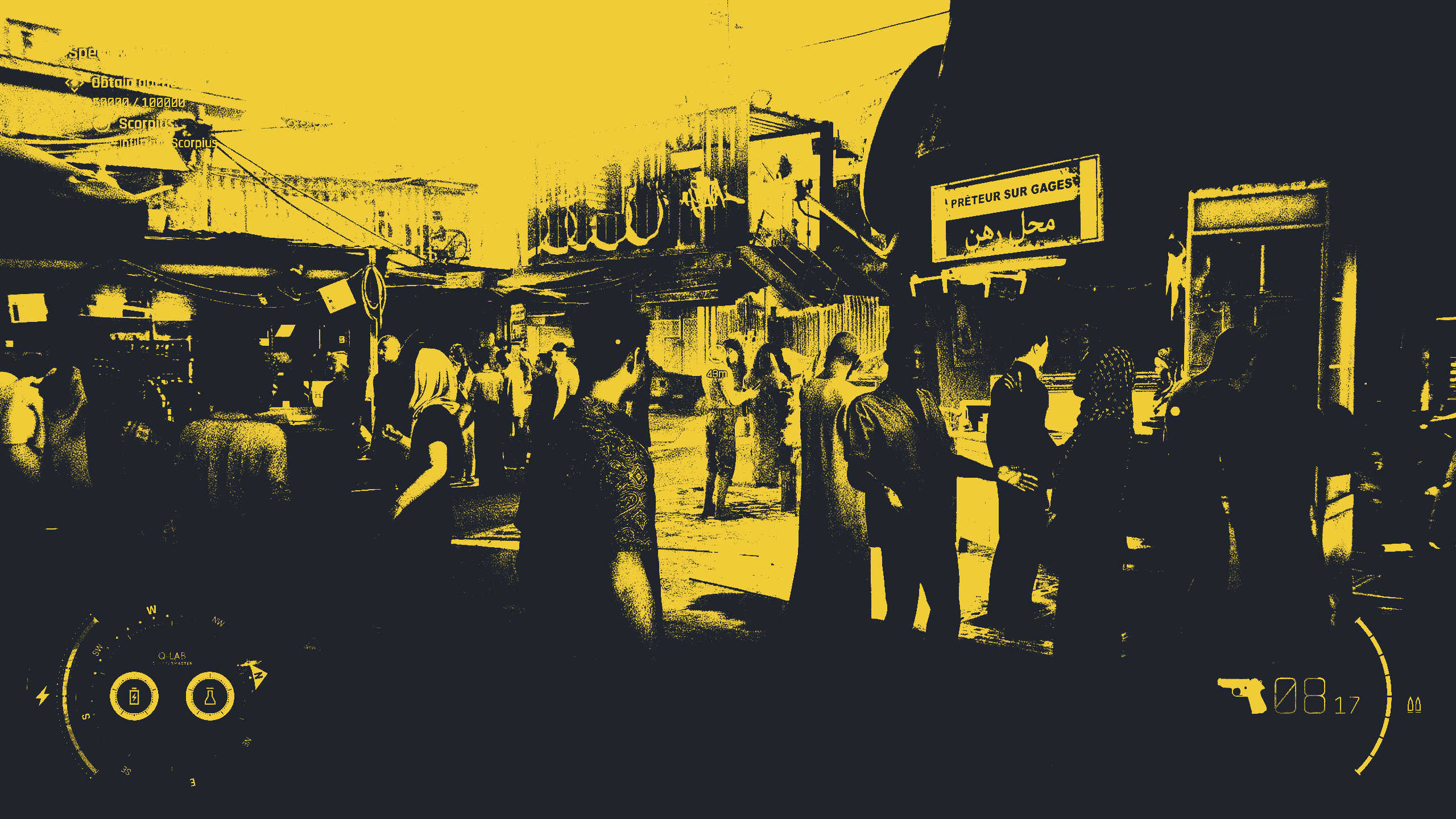
Ian Fleming is quoted as having once said his most famous creation, MI6 agent James Bond, "was a compound of all the secret agents and commando types I met during the war." From his inception Bond has always been an amalgamation rather than a solid thing of his own. As the first proper Bond game in nearly a decade and a half, 007 First Light similarly falls back on tossing influences into the blender. By pulling from so many influences, however, the game is often in conflict with itself.
To balance its inspirations First Light divides itself into two major modes of play: stealth and action. Let's start with the latter
James Bond is the worst spy you know. Watch a movie and count how long it takes for the secret agent to tell someone a) he works for MI6, b) what his mission is, and c) his name is Bond. James Bond. It will not take very long. Especially on film, 007 is the agent of opulence in all things. He dresses nice, drives fancy cars, sleeps with every woman he can, and conducts missions almost exclusively in locations you'd find on a billionaire's vacation itinerary. Stealth is not sexy but firing guns and driving a tank through the streets of Moscow are. First Light wants you to experience this Bond.
During "License to Kill" segments, Bond really gets to let loose. Shooting and punching enemies left and right with reckless abandon and making quips the whole time. It is Bond through the lens of every cinematic action game in recent memory. The biggest influence being Uncharted, Naughty Dog's series that stands as the epitome of the "games as action movies" genre. Hand to hand combat feels eerily like the work of Naughty Dog, with shooting, thankfully, improved. But the flow of these segments is undeniably meant to push you forward and raise your adrenaline.
Some of First Light's most impressive, and memorable, sections occur in this mode of play. One of its most audacious set pieces is a clear homage to Uncharted 3 and finds Bond fighting baddies in a moving cargo plane before being ejected into the sky sans parachute. And while this could read as treading familiar ground, developer IO Interactive does Naughty Dog one better, because Bond must come out on top. While fighting through the plane you are also given control of it. Tipping the plane side to side flings cargo and bodies with abandon as you push forward. It's delightful in a way that feels so suited to Bond. These sections, though, are often short flashes compared to First Light's second, and more extensive, mode.
IOI was seen as the perfect fit for a Bond game due to the success of Hitman World of Assassination. The revived trilogy starring Agent 47 stands as almost the ideal of a spy game. Set in grand environments that serve as murder sandboxes filled with opportunity, Hitman is part puzzle, part stealth, and part immersive sim. First Light replicates this structure. The first real mission Bond is sent on, set in a gorgeous hotel hosting a chess tournament, almost too perfectly evokes Hitman's initial stage, set in a Parisian estate hosting a fashion show. Agent 47's benefactor in that mission is even MI6. Hitman continues to haunt First Light throughout. A nightclub, a tropical resort, a snowy mountaintop facility. Are these descriptions of levels in First Light or World of Assassination? The answer is both.
By constantly courting comparison, First Light gives players the wrong idea. Never is Bond let loose in a sandbox in the same way that 47 is. Hitman revels in seemingly simplistic missions set in complex environments. Eliminate your target. How you do so is up to you. That comes with a wealth of possibilities at 47's disposal: collecting disguises, eavesdropping on conversations to gain information, manipulating the environment to cause fatal accidents. Much of the joy in playing Hitman comes in finding the most convoluted and complex ways to complete a mission undetected. That could be by poisoning a target's food or sabotaging a car. The world is your oyster. Simplicity equally elicits glee and laughter in Hitman's sandboxes. With so many ways to kill, it is almost the most absurd option to just shoot someone as quickly as possible and book it out of a level.
Total freedom is never afforded to Bond, or the player, in First Light. Disguises cannot be regularly taken from decommissioned enemies, bodies cannot be hidden, and violence is not always an option. Environments feel smaller and so do the options they contain. While there are still opportunities for eavesdropping and multiple routes into restricted areas, it all feels noticeably smaller. With a skeleton built on Hitman's blueprint (First Light is made in the same Glacier game engine) players are seemingly invited to play like Agent 47 before being faced with the reality of that impossibility. It often makes First Light feel less than a truly great espionage game.
Bond is restricted here as a result of the game's narrative focus. Hitman's narrative is all but non-existent, meaning each level can be truly free. First Light, however, has story beats it needs to hit. Perhaps there are a handful of ways to reach an objective but at the end of the day First Light needs to shepherd you through the progressive objectives of a level to forward the plot.
This is the central conflict of 007 First Light. Is it a spy game or a Bond game? These are not the same thing. Videogame espionage is (largely) synonymous with stealth. The likes of Metal Gear Solid and Splinter Cell have become standard bearers for the genre by employing a mechanical emphasis on remaining undetected. Even when violence is employed, it must be performed with precision. Stealth games are more puzzle boxes than anything else. Cinematic spies like Bond need to show off, meaning within a game the ubiquitous mechanics of the genre clash with the narrative needs of the character.
But IOI has one trick it pulls to bring First Light's warring sides together in unison: bluffing. When Bond is caught in restricted areas, or doing suspicious things, he will be given the option to lie. This will play out as Bond giving some absurd excuse as to why he is allowed to be there actually. Perhaps he is security running a test or hotel staff chasing a thief. The excuses seem endless and each one is more stupid than the last. But everyone believes him. He's handsome and charming. This is the most Bond thing you can do.
The only struggle in using the bluff system is accepting its utility. To engage with bluffing means accepting failure. You must let yourself get caught, something that goes against every instinct ingrained in the Hitman player. Failure in World of Assassination is best responded to by resetting the level so you can do a perfect run. First Light hides its best mechanic behind a hurdle as a test. Failure is not the end, it is an opportunity.
Once you stop caring about perfection and learn to use every tool Bond has, First Light's sandbox segments are given new life beyond the expectations brought on by the Hitman comparison. Rather than spaces designed with endless potential for planning, these are spaces with endless potential for improvisation. Sure you might stealth for a bit, but suddenly you get caught and bluff your way to success. Alternatively a guard spots you and the best solution is hand to hand combat. Throw gadgets like the exploding pen in and everything opens up. First Light is a game that gives you all the tools you need to orchestrate the indulgent opulence of a good 007 story. Are you playing like a spy or playing like James fucking Bond?
***
Willa Bloomfield-Rowe is a queer games critic based in New York City whose writing has been featured in The A.V. Club, Digital Trends, Kotaku, and more. She also hosts the Girl Mode podcast. When she isn’t talking games she can be found on Bluesky bemoaning the state of the New York Mets.