In one plot arc from The Americans, a 2013-18 TV show about married KGB spies deep undercover in the United States, Matthew Rhys’ character Philip Jennings has to romance a teenage girl whose father works for the CIA. He insinuates himself into her life, smokes weed with her and hangs out alone at her family’s house in order to gain intelligence on the CIA’s activities in the Soviet-Afghan War. Earlier in the show, Philip wedges himself into another woman’s life, forming a years-long relationship and eventually marrying her under a fictional name to maintain his cover. When his lies are exposed, he sends her away to live a life alone in the alien culture of 1980s Russia and continues his work.
Both Philip and his spy partner/wife Elizabeth (Keri Russell), seduce, befriend, and betray a wide array of unsuspecting people whose naivete—and ultimate disillusionment—is rendered in heartbreaking detail over The Americans’ six seasons. Their manipulation of others spools outward to find new targets and then contracts into ever tightening knots of paranoia and suppressed guilt. By the end of the show, it has become impossible not to notice that Philip and Elizabeth have lied so thoroughly to themselves and everyone they know that they can only reclaim some semblance of self through extreme personal and political action. They hardly know who they are anymore.
It’s queasy stuff. To be so committed to a country, or an ideology, that you can routinely betray others in the most intimate ways is to take on a mountain of inhuman regrets. It’s only natural that being a spy fractures the mind.
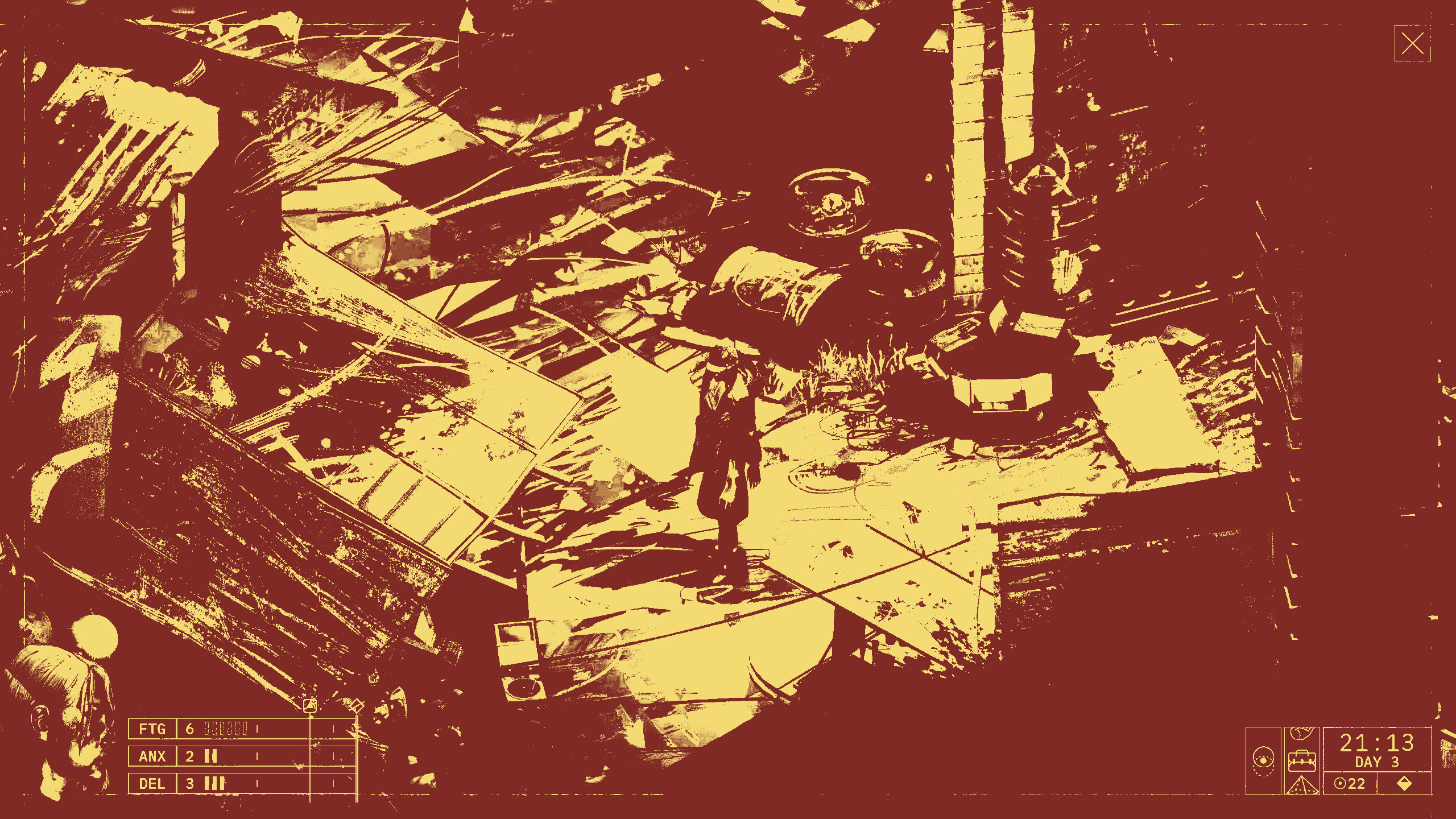
In Zero Parades: For Dead Spies, Hershel Wilk, cryptonym Cascade, has served the Superbloc of communist nations for a very long time. She works in opposition to the double threats of an alliance of capitalist nations dubbed ‘The Developed World’ and a fascist monarchy called La Luz. She is a secret agent who moves through the underworld in an effort to push back the seemingly unstoppable waves of her enemies’ encroaching expansion into new territories, geographic and psychic.
When the game begins, she has found herself in the city of Portofiro, a depressed city-state whose future seems to lie in either colonization by La Luz, which is already drenching its markets in Luzian pop culture, or by the Developed World, through the debt it’s taken on through the international EMTERR (l’Empire sans Territoire) bank. Cascade’s prospects aren’t much brighter than the city she inhabits.
Five years before the plot starts, Cascade’s former Superbloc spy network—'The Whole Sick Crew’—was blown, many of her colleagues died or went into hiding, and she spent a purgatorial half decade in a bureaucratic time-out dubbed ‘the freezer.’ By the time she’s arrived at her safehouse to go back on mission, her partner is drooling, catatonic and pantsless in their apartment meeting place. She has no idea what’s wrong with him and little idea what she’s meant to be doing in Portofiro at all. It isn’t her fault that the job is in shambles before she even got started, but that doesn’t help her outlook.
It’s important for Cascade to get the mission at the heart of Zero Parades’ plot right for both personal and professional reasons, which have blended together into something indistinguishable to her. And her mind is a highly malleable place, expressed through game design where various facets of her personality and political opinions are sorted into RPG-style traits that make her aware of or oblivious to undercurrents in conversations and her surroundings.
Though she’s a changeable character in this sense, Cascade is defined still by a sardonic personality and, coupled with this, a corrosive guilt over her failures in averting her old crew’s past tragedy. (Within a lengthy thesis written by a lost comrade called Holocene, Cascade finds herself referred to as having "a melancholic air of permanent regret, and an insistence on taking everything upon oneself, alone.”)
The city of Portofiro reflects her mental landscape. A Knossos of debris-strewn alleys and terraced apartment buildings, the city is as twisting and decrepit as Cascade's own mental state; and its population haunts this maze of urban decay in postures of personal rot, slumped over card tables and leaning against payphones, like near-spectres with unfinished business that must be tended to before they can rest. Most of them have something that needs doing, presented as questlines to follow, and these story threads typically lead to new ways for Cascade to assuage or further her sense of guilt. An invitation to head to the outskirts of the city and spelunk through the remains of a space shuttle launch silo offers an opportunity to gain intelligence from another agent, but it also sees Cascade meet with a lost colleague with a different outlook on the disasters of their mutual past. An investigation into the debt owed by a streetwear obsessed pedestrian opens up ways for Cascade to conceptualize the fluid values of culture and money. Sometimes, a quick conversation reveals a pointed insight, a scratched underline beneath a pithy thesis. A phone technician, talking about his life, says: "A terrible thing, to live within the ruins of the self" and then, after a moment, continues: "But we keep going any way we can."
All of these interactions draw on the voices that fill Cascade’s head. The warring elements of her personality gibber away at the turning points of conversations, cranial phantoms with fishhooks set for her next action. They want her to move one way or another; they want her to progress through the stasis of regret to find some version of herself capable of reckoning with it. Absolution is a tricky thing, and reaching for it might mean Cascade throws away her existing belief system. She might succumb to a contrasting, long-hated ideology that would make her past failures actually hidden victories on the road to becoming a former-communist-turned-fascist, perhaps. She can be a communist spy unburdening herself, bit by bit, of her previous worldview. She can also harden into a political zealot or float free from definitions in the abstract spaces of indefinite thinking. All of these options exist within her dossier, a menu of skill points that serve as attributes of any given person's mental landscape—a propensity for logic and rationale, or a devotion to poeticism and reality-dissolving spiritual esoterica.
Zero Parades is a propulsive story of uncovering both the architecture of a fictional setting and of carrying out a covert spy mission. It’s also a story of Cascade becoming herself again, in whatever way might be possible for someone trying to remake their identity. As she meets new people and reconnects with lost colleagues, she makes bad decisions and good ones, the dice throws and skill checks standing in for fumbled words and a faltering will. All of this is essential.
When asked about her musical output, the presumably vanished pop star Ultra Violeta says, "Mostly I think about the mistakes.” She rattles off the songs that needed more work, the off notes played, the mediocre album names settled upon, and finishes by saying that, in the end, "you build beautiful cathedrals to compromise." It sounds like a defeatist statement, but those cathedrals actually can be quite beautiful when uncoupled from the source of their construction. Cascade is a wreck, and in stumbling on the path toward recovering from her failures, each pang of guilt and each new mistake speaks to the rebuilding of her willingness to face the rotting, probably doomed world she inhabits.
The fact that she cares enough to feel bad about her mistakes to clumsily seek to redress them—composing an apology card to an old comrade, helping another perform an ad-hoc lobotomy meant to resolve his own guilt—sets her apart from those whose past mistakes calcify into villainy. There are only a handful of outright monsters in Zero Parades, but the thing that unites them is that they possess the rigid self possession of autocrats (or, per the game’s fiction, the techno-fascists of La Luz). The character of Silhouette, an interrogator, is one example. She delights in the sexual tensions of espionage—the false identities, the interplay of power exerted and suffered beneath, the penetration of minds—and discusses the spy persona she’s crafted as if it is totally irresponsible for the torture she applied to Cascade earlier in the game.
There’s more humanity in the sloppy spies of the Whole Sick Crew, their brains ripped apart by failure and reconstituted when revived alongside Cascade in a climatic assassination plot meant to thwart their enemies. Whether they win or lose, in the end, their decision to move forward into some kind of action works as a reclamation of identity. Their guilt can be a catalyst.
In The Americans, the real humanity of the characters comes in moments when they assert themselves in response to operational or personal disasters. Their guilt entrenches their worldview or causes them to push against existing beliefs. Cascade’s ability to feel regret, to think mostly about her mistakes, is what gives her humanity, too, and Zero Parades is a story about how she can make something more than sadness out of confronting that.
***
Reid McCarter is a writer and a co-editor of Bullet Points Monthly. His work has appeared at Kotaku, The AV Club, GQ, Kill Screen, Playboy, The Washington Post, Paste, and VICE. He is also co-editor of SHOOTER and Okay, Hero, co-hosts the Bullet Points podcast, and posts on Bluesky.