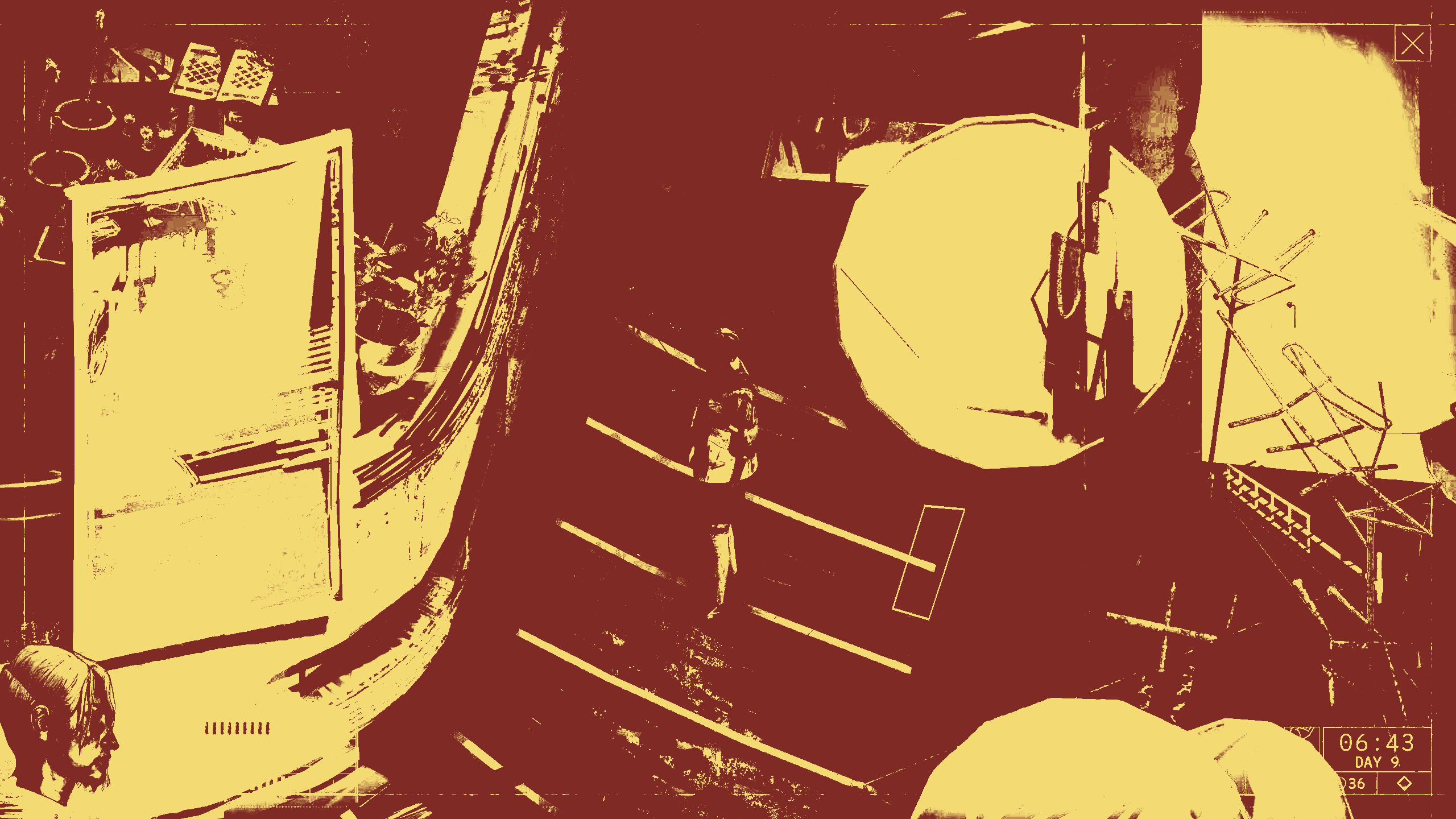
Handler to operant: "We're at the End of History. Everything that can go wrong, already has."
The history of Zero Parades is a collage of the real world: the game takes place in Portofiro, an island state with characteristics of Cuba and Argentina, caught between the influence of the communist Superbloc, hallyu-esque cultural powerhouse La Luz, and the capitalist confederacy known as the Developed World. The Latour-Woolgar Treaty established equilibrium between these powers, the name a reference to sociologists Bruno Latour and Steve Woolgar, authors of 1979's Laboratory Life: The Social Construction of Scientific Facts. You'll come across all manner of real-world easter eggs, from the Challenger disaster to German meet-cute cannibal Armin Meiwes to the CIA's many attempts on the life of Fidel Castro. Everything is a reference, a splinter of reality waiting for you to pull it free.
///
Operant to self: "The Operant Bureau transformed into an onanistic organization, that is, one that exists solely to satisfy its own circular pleasures…"
Protagonist Hershel Wilk is an agent for the Superbloc's Operant Bureau, or the Opera; all the world's a stage, et cetera. John le Carre's mirror-world SIS is the Circus, presided over by the man known only as Control: order to chaos. Hershel's actions reboot the engine of History, shaking the world out of hibernation: chaos to order. Francis Fukuyama's end of history is a world of liberal-democratic supremacy, an unequal utopia where lib-dem states do not "behave imperialistically" toward one another, but reserve the use of force for non-democratic nations that "do not share their fundamental values." Hershel finds herself caught between her own assassination mission and a false flag operation; the former intended to decapitate negotiations between La Luz and the Developed World, the latter to give La Luz cause to invade Portofiro. History is like tectonic plates grinding inevitably at each other until they produce an earthquake; the End of History, in Zero Parades, is as flimsy and contingent as anything produced via a written treaty. Hershel's target, the Luzian Minister of Mass Culture or, improbably, the "Grand Lich of Techno-Fascism," is revealed to essentially be a clone, a suit able to be filled by anyone. But the shadow world of espionage must justify itself—a gun is made for firing.
///
Operant to interrogator: "So this is the End of Poetry."
In le Carre's The Looking Glass War, the head of a second-rate intelligence outfit seizes an opportunity to get ahead of his rivals in the Circus. The vain middle manager Leclerc plunges his ministry into ruin for the chance to feel as big as Control, as powerful as he imagines Control feels. As Smiley debriefs his team after disaster, Leclerc still has the presence of mind—of ego—to invite Smiley to dinner, as if they're equals. He grasps at politesse, at appearances, anything to reassure himself he's one of the big boys. In reality, he sent a man to die behind enemy lines, unprepared and unsupported; "He seemed reconciled; the thing was dismissed," le Carre writes.
Zero Parades is about a disgraced spy getting another bite at the apple. Hershel exits the Freezer, an RPG-friendly literalization of being "out in the cold," and learns why she's been sent to Portofiro, and assembles a team of old comrades and new acquaintances to pull off her mission… yes, this is Verso Books Mass Effect 2. Hershel is strangely flat and grey, and it's too easy for her to succeed. But, as if compensating, the game surrounds her with a roster of wacky personages; phone-sex operator, ensouled boar, pop star, lesbian interrogator, talking monkey, DIY squatters, a literally brainwormed genius.
The style of dialogue writing established in Disco Elysium is now as commonplace in RPGs as any Dungeons and Dragons convention: the player is offered a couple glib replies, maybe political in nature, and a non sequitur, perhaps crass or scatological in nature. Whether this is to your taste or not, I don't know—but its presence here seems to be hereditary more than anything else.
Like Leclerc in Looking Glass War, there's something of recapturing the old glory in Zero Parades, no matter the odds. It's obsessed with copies, doubles, restarts, profoundly self-referential and backwards-looking, like the tangent in Disco Elysium about the foibles of a group of ambitious videogame developers blown up to full size. At its best, it crackles. At its worst, it repels: the découpage of references, the smarmy dialogue, the parade of cartoon personalities. It carries a sense of fatalism, of being posthumous, all grievances aired in one last desperate salvo. The final moments are less a tease at a potential sequel and more a fade-out. It feels designed by people who seem to know, like Hershel, that this is their last bite at the apple.
***
Astrid Anne Rose is a long-time contributor to Bullet Points. Her work can be found in MEGADAMAGE, BOMB Magazine, and The New Lesbian Pulp, as well as on Gumroad and itch.io.